EVERGREEN LISTENING GUIDE · REVIEWED 14 OCTOBER 2026
Durga Puja songs: from Mahalaya to Dashamiমহালয়া থেকে দশমী: পুজোর গানের পথ
Durga Puja is not served well by one undifferentiated party playlist. Its emotional pace changes from the invocation of Mahalaya to Agomoni welcome, crowded pandal evenings and the tenderness of Dashami. This guide helps you choose music for each turn.
মহালয়ার ভোর, আগমনী, প্যান্ডেলের উচ্ছ্বাস আর দশমীর বিদায়—প্রতিটি মুহূর্তের সুর আলাদা।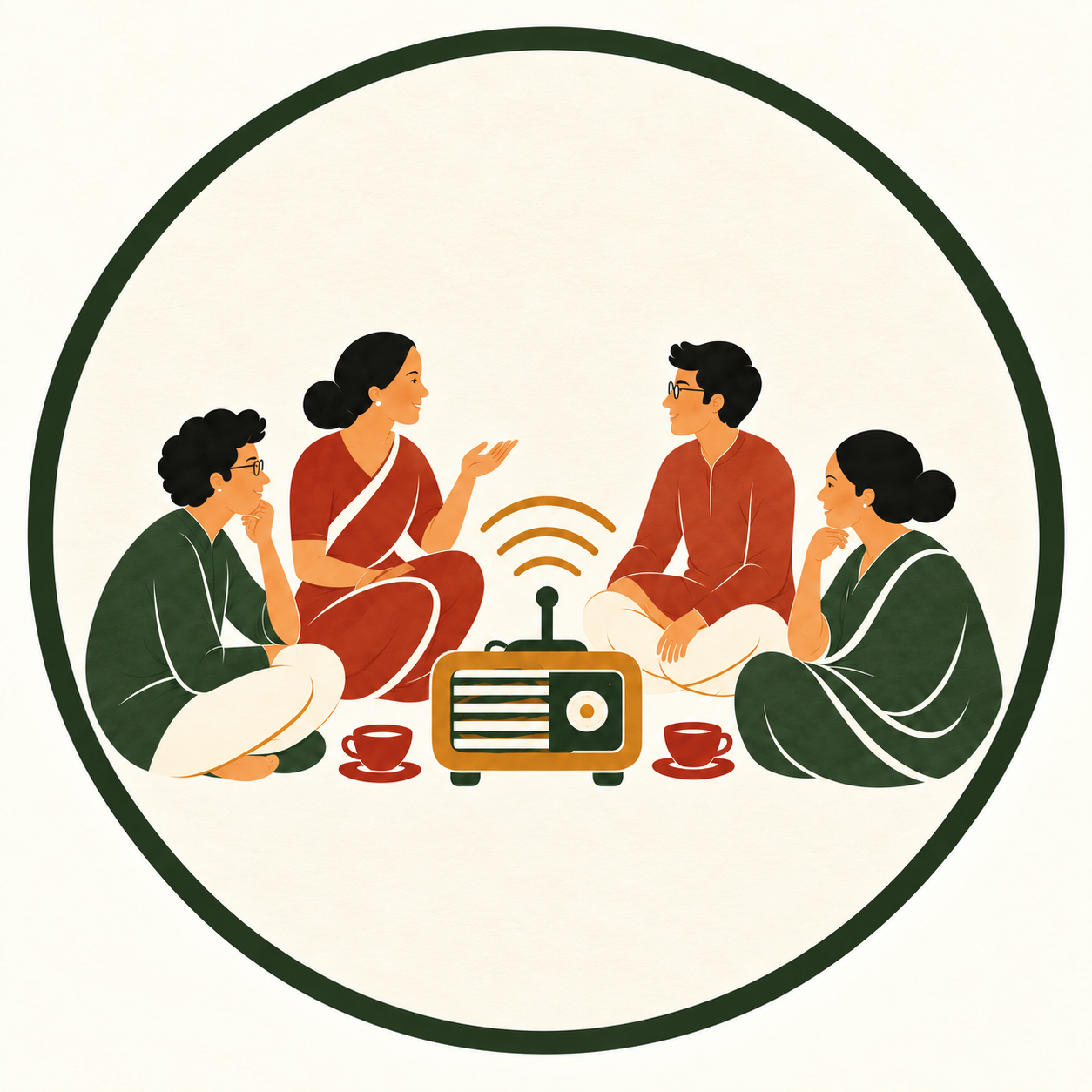
HOW THIS GUIDE WAS CURATED
A sequence, not a ranking
We selected these routes by listening occasion rather than by chart position. The questions were practical: does the music leave room for a quiet dawn, carry a long walk between pandals, welcome several generations into the same room, or help the evening settle? Older Bengali Puja releases sit beside devotional material and present-day non-film music because festival memory is layered. The result is not a claim about the most popular songs. It is an editorial path that you can shorten, reorder or combine with family favourites.
For a compact day-by-day version, read our Mahalaya-to-Dashami Listening Letter. This page goes deeper into the moods and listening choices behind it.
MAHALAYA · মহালয়া
Begin with attention, not shuffle
Mahalaya listening often begins before the day feels fully awake. Mahishasura Mardini, with recitation, song and dramatic movement, asks for a different kind of attention from a normal playlist. If this broadcast tradition belongs to your household, let it play as a complete work instead of extracting one familiar passage and immediately switching to upbeat songs. The stillness is part of the experience.
Afterwards, move gradually into Agomoni. These songs imagine arrival and return: Uma coming home, a family preparing to receive her, and an entire season beginning to announce itself. Keep the first selection spacious. Voices, words and melodic clarity matter more than volume. This route also works for listeners outside Bengal who want a musical bridge to the feeling of home.
PUJO CLASSICS · পুজোর পুরনো গান
Make memory part of the programme
Bengali “Pujor gaan” also means the songs that entered homes through seasonal records, radio programmes and later cassettes. They are not all devotional. Many are romantic, reflective or simply tied to the anticipation of autumn. Place these familiar recordings around Shashthi or a family lunch, when different age groups are likely to be listening together.
A good retro sequence should breathe. Alternate immediately recognisable refrains with quieter songs; avoid stacking only high-energy favourites. The pleasure comes from recognition and conversation—someone remembering a record sleeve, a radio request or a Pujo from another decade. That social memory is why a classics list belongs beside, rather than inside, the explicitly devotional Agomoni route.
PANDAL WALKS · প্যান্ডেল-হপিং
Energy for streets, queues and adda
Saptami and Ashtami need music that can survive movement: traffic, friends joining midway, food stops, queues and a phone speaker that is never quite loud enough. Choose clear hooks and varied tempos rather than an uninterrupted rush. Start gently around anjali or an early family visit, then lift the energy for the long evening walk.
Context matters here. A celebratory playlist is for travel and adda, not for competing with a ritual or a live cultural programme. Download it before leaving if mobile coverage is likely to be crowded, and keep the order flexible. The best pandal soundtrack makes the group feel accompanied without turning every encounter into background noise.
PUJO NOW · আজকের পুজো
Leave room for new Bengali voices
Festival memory should not freeze at the songs we already know. Navami is a useful moment for contemporary Bengali pop, rock, folk fusion and independent releases. Listen for writing that understands today’s city, distance, friendship and romance rather than songs that merely add dhak to a generic arrangement. New music earns a place through feeling and craft, not novelty alone.
When adding a discovery to your own list, note why it fits: a chorus for a late-night drive, a lyric that catches Pujo romance, or a quieter song for the ride home. That small act of curation prevents the playlist from becoming an algorithmic dump and helps listeners return to artists after the festival ends.
DASHAMI · দশমী
Let farewell change the meaning of arrival
Dashami does not require a sudden stop. Return to an Agomoni song and hear how its promise of arrival now contains departure. Follow it with one or two family favourites, then allow silence between tracks. Farewell, homesickness and the promise of “asche bochor abar hobe” can coexist without being forced into a cheerful finale.
If you are making a shared playlist, invite one contribution from each person rather than asking everyone for ten songs. The result will be shorter but more personal. Keep a copy for next year and record the date: over time, the changes in the list will become a small history of the people who listened together.
CONTINUE LISTENING
Related Adda Baithak guides
Last reviewed 14 October 2026. Traditions vary across families, regions and community pujas. This is an editorial listening guide, not a ritual prescription or popularity ranking.